Social Media Strategy for Aesthetic Clinics: Do Less, Prove More

I grew nine aesthetic clinics with almost no social media marketing. That isn’t a boast, it’s a confession, because for most of those years I felt guilty about it. Every trade magazine and every agency pitch said the clinics that would win were the ones posting daily, and we weren’t.
We were busy instead. The diaries filled from Google, from Google reviews, and from patients sending their friends. Instagram got a post when there was something worth showing and nothing when there wasn’t.
I still talk to clinic owners every week who are posting five times a week, spending their evenings on Reels, and watching a diary that stays soft. So this is the social media strategy I’d actually run today, and the honest version of what it can and can’t do for a UK clinic.
Why this costs more than it looks
Social media feels free, which is why nobody counts it. Count it. An owner-practitioner spending an hour a day on content is giving up five treatment hours a week. At a blended £250 an hour that is more than £60,000 a year of capacity, and I’ve yet to meet a single-site clinic whose Instagram brings in anything close to that.
There is a second cost that is harder to see. When the feed becomes the marketing plan, the things that actually fill a diary — the Google Business Profile, the treatment pages, the review ask after every appointment — get the leftover time. The clinic two streets over that spent those hours on search now sits in the map pack for “lip filler” plus your town, and you don’t.
None of that means switch it off. It means give social a specific job and stop asking it to do the one it’s bad at.

The strategy: five decisions
1. Treat it as a proof channel, not a reach channel
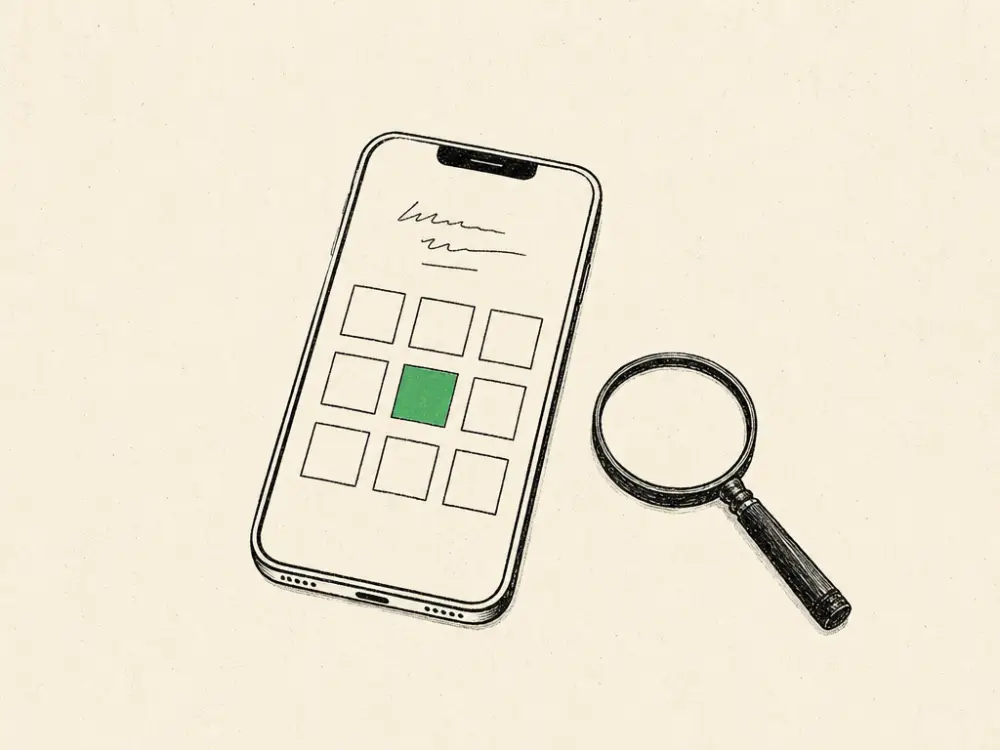
Very few patients discover a clinic on Instagram. What they do, in enormous numbers, is check a clinic on Instagram after finding it somewhere else. She searches for the treatment in her town, shortlists two or three clinics from the map results, then opens each one’s profile before she books. She wants to know three things: is this place still trading, does the work look real, and is there a person behind it I’d trust with my face.
That is an R2 job in the framework I use — reputation, trust visible enough to do the selling for you. Once you accept that, the whole strategy simplifies. You are posting for the checker, not the scroller. The checker doesn’t need daily content. She needs a recent post, some real results, and a human being.
2. Post three things, and post them properly
Everything worth putting on a clinic’s feed falls into three buckets.
Real work, within the rules. Before-and-afters of your own patients, with written consent, unedited, with honest captions about what was done and how long it lasts. The UK advertising rules apply to your Instagram posts exactly as they apply to a billboard: no brand-name toxin and no offers on it, no time-limited deals that pressure people into booking, and no captions that make a medical treatment sound trivial.
The practitioner and the room. Your face, your qualifications, your register, the treatment room in daylight. Patients are handing you a needle’s worth of trust. Show them who’s holding it.
The practical stuff. Which days you have availability, what a first consultation involves, what to expect afterwards. Boring to you, useful to her, and the kind of post that quietly moves someone from checking to booking.
Three good posts a month covers all of it. Twenty filler posts a month covers none of it and burns the hours you needed elsewhere.
3. Fix the bio and the DMs before anything else
The bio link and the direct messages are the only two parts of your profile that produce a booking, and they’re usually the two parts nobody has thought about.
The link should go to your booking page or your most-booked treatment page. Not to a menu of six links, and not to the homepage. One click, one destination.
DMs are enquiries. Treat them like the phone. In my experience an answer within fifteen minutes converts about twice as often as an answer two hours later, and a message left overnight is usually a patient who booked elsewhere by morning. If someone asks the price, tell her the price and offer two appointment times in the same message. If you’d rather not have that conversation in DMs at all, put your prices on the website so the question rarely needs asking.
That’s the S in S.E.L.F — secure every enquiry — and a missed DM is exactly as expensive as a missed call.
4. Be honest about paid social
Meta ads can put your clinic in front of people who weren’t looking for it. For a clinic turning over under £200,000 a year, that’s mostly the problem, not the benefit. Someone scrolling past a filler advert at 10pm is weeks or months from booking, if ever. Someone typing “tear trough filler” plus your town into Google is days away.
Two things make it harder still. Meta has stripped out most of the health-related targeting, so you’re paying to reach a broad local audience rather than people with any interest in aesthetics. And the rules on advertising prescription-only medicines mean the treatment most clinics want to promote is the one you can’t name in an ad.
If you run paid social anyway, run it on one condition: every ad lands on its own tracked page, and you compare cost per booked consultation against what the same money produces in Google Ads or in the treatment pages themselves. That’s the L in S.E.L.F. If you can’t trace a treatment back to the click that started it, you’re paying for hope.
5. Measure one thing, and it isn’t followers
Follower counts, likes and reach are the numbers the platforms show you because they’re the numbers that keep you posting. None of them pay a wage.
Track three instead: profile visits, clicks on your bio link, and bookings that arrived through the link or a DM. Then ask every new patient at consultation how she found you, and write the answer down. After three months you’ll have the only report that matters: what social actually brought in, against what search and referrals brought in, against the hours you put into each.
For most clinics I’ve seen, that report ends the guilt. Social turns out to be a useful five per cent of new patients and a much larger share of reassurance for the patients Google sent. Both are worth having. Neither justifies an hour a day.
Which platforms, in plain terms
- Instagram — the one that matters for aesthetics. It’s where the checker looks.
- Google Business Profile posts — not social media as such, but updates posted there appear inside the search result itself, which is where the patient already is. Do these before you do Facebook.
- Facebook — worth a page that mirrors your Instagram, and worth more in towns where your patients are over forty. Local groups occasionally send real patients. Paid Facebook rarely does.
- TikTok — only if you genuinely enjoy being on camera and will still enjoy it in six months. It reaches a younger audience with less money and less loyalty, and its results are hard to trace.
- LinkedIn — for you, not for patients. Skip it as a clinic channel.
What to do this week
- Change the bio link so it goes straight to your booking page or your best treatment page.
- Put DMs into the same inbox as your calls and forms, with a fifteen-minute response target in opening hours and an auto-reply outside them.
- Write three posts for the month — one real result within the rules, one of you and the room, one practical — and schedule them. Then stop.
- Add “how did you hear about us?” to your consultation form, and start counting.
The hours you get back go to the Google Business Profile, the treatment pages and the review ask. That’s where nine clinics’ worth of diaries came from, and it’s still where I’d send an owner with an empty Tuesday.
Surinder Ahitan grew the CoLaz aesthetic clinic group from one clinic to nine UK locations in six years, mainly through search rather than social.
If you’d like this handled for you, I build and run websites for UK aesthetic clinics for £297 a month, with no build fee and no minimum term. Book a 30-minute call and I’ll tell you honestly whether it fits.